

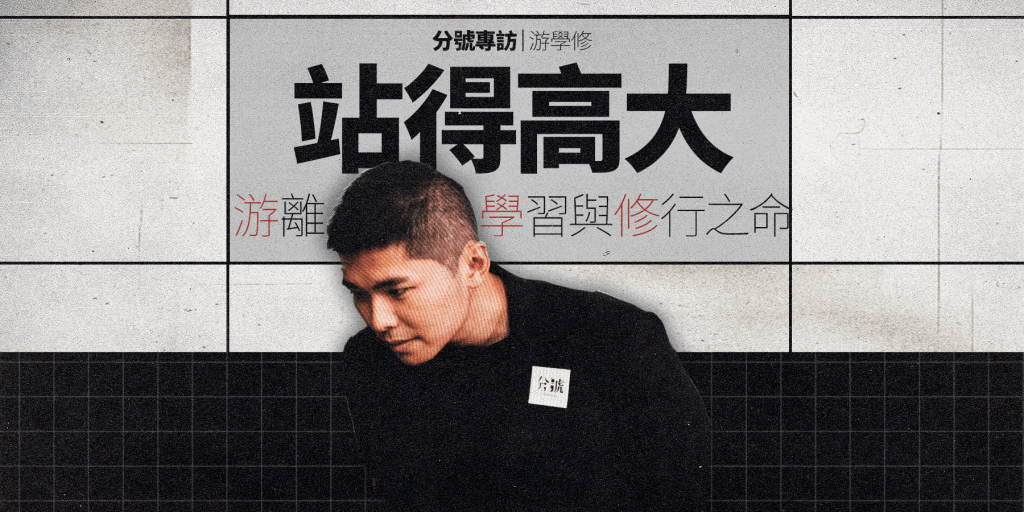
When Hong Kong YouTube channel Trial & Error(試當真) announced its closure on 1 April after five years, the reaction was immediate and polarised. For supporters, the decision marked the end of one of the city’s most influential independent online platforms. For critics, it prompted familiar speculation about financial viability, creative exhaustion, and whether sustained online backlash had finally taken its toll. The founders later addressed the rumours in a livestream, saying the primary reason for shutting down was mental and physical health.
Among them was co-founder Neo Yau, an actor and creator who had become one of the platform’s most visible figures. He rejected the idea that the decision was driven by controversy or business failure, describing it instead as the point at which continuing was no longer sustainable.
For Yau, the end of Trial & Error was not a dramatic rupture but a reckoning, with workload, identity and the limits of operating simultaneously as an actor, content creator and company head.
From limited recognition to platform builder
To many audiences, Yau is best known as one of the faces behind Trial & Error, a channel that grew from low-budget pandemic sketches into a full-scale production operation. Yau, however, continues to define himself primarily as an actor.
His entry into the industry followed an unconventional path. He participated in producer Winnie Yu Tsang’s(俞琤)Sky High Creative Partners project (天比高創作夥伴賽馬會策動創新思維), studied screenwriting at the Hong Kong Academy for Performing Arts, and in 2014 co-founded the satire YouTube Channel The Mocking Jer with Ho Kai-wa (何啟華), Ho Cheuk-tin (何爵天)and others. That same year, he starred in She Remembers, He Forgets (哪一天我們會飛), which he considers his first major step into the film industry. By 2018, he had appeared in seven films, alongside television roles and voice work.
Despite steady output, recognition came slowly. At one point, an online archive categorised Yau as a “dim star”(暗星), which means a performer with limited public recognition. The label is no longer accurate. He has since walked major awards red carpets and become a prominent contender during awards seasons. Still, the term reflects a period when his presence in the industry was persistent but peripheral.
Yau describes those years as a form of “drifting”, not disappearing, but moving between film, online video and theatre to remain active in an industry known for rapid turnover. “Looking back now,” he said, “those different forms meant that as an artist, I never disappeared.”
Trial & Error as a working philosophy
The name Trial & Error pre-dated the channel. In 2018, Yau wrote, directed and starred in Haters Gonna Stay (仇老爺爺) for ViuTV. The production company set up for the project was named Trial and Error Limited. After discussions with his partners, the name was later reused for the YouTube channel.
The phrase comes from an cantonese on-set term used when rehearsal time is limited, and a crew proceeds with a test shoot anyway, hoping to find unexpected energy. Yau said adopting industry jargon confused some viewers and invited mockery, but he saw it as an accurate description of the group’s method: learning by testing rather than aiming for polish from the outset.
Trial & Error launched during Hong Kong’s third wave of the pandemic in late 2020. Its teaser featured three people in slippers and T-shirts walking slowly towards the camera in a living room, squinting under harsh lighting. There was no spectacle at all, just a beginning.
Early videos were filmed in Yau’s apartment with dim, unprofessional lighting. Viewers compared them unfavourably with brighter, more polished channels. Yet, Yau recalled the period as “the ugliest” and, in retrospect, “the most exciting”.
The channel’s first upload, A Realistic Tenet(寫實的天能), carried a theatre-like rhythm associated with CapTV. Over time, Trial & Error expanded into parody songs, dubbing videos, mockumentary formats and larger variety show productions. According to Yau, the objective was not volume but experimentation: testing formats, audience tolerance and creative limits.
As the channel matured, production standards rose. Shortly before the shutdown, filming for the drama series of the channel followed conventional professional procedures, with structured lighting, detailed direction and disciplined performances. What began as a home-based project has evolved into a full production environment.
Yau said the moment he was most proud of was Trial & Error’s first anniversary live show, which combined theatre, music, variety and live interaction. At a basic level, he acknowledged, it generated “fame and revenue”. More importantly, it proved that high-risk ideas could succeed.
Anger, restraint and ‘shutting up’
In early interviews, Yau said he hoped Trial & Error would provide him with “capital” — fame, money, influence and access — to help change Hong Kong’s entertainment industry. Looking back, he said that ambition was only partially achieved.
Yau described his earlier creative drive as being fuelled by anger, directed both at society and at the industry. That anger was expressed most explicitly in a spontaneous YouTube livestream he hosted himself, in which he spoke at length and without a script, venting years of accumulated frustration.
The broadcast divided audiences. Some criticised its confrontational tone, while others saw it as an unusually direct moment in Hong Kong’s entertainment landscape, where public figures rarely articulate anger so openly.
Over time, that anger faded. Yau said exhaustion forced a reassessment. “When you’re barely holding yourself together,” he said, “you have to take care of yourself first.”
Asked about the most important lesson from Trial & Error, he answered simply: “Shutting up.”
“Some things aren’t solved by talking,” he said. “Sometimes you just have to swallow it.” He rejected the idea that this change represented a loss of passion. Instead, he described it as a shift in temperament, learning to restrain rather than abandoning conviction.
The end of “Trial and Error”
Although Yau is often perceived as the most reluctant of the founders to let go, he said the decision to close Trial & Error was proposed by him. He explained that he had not moved on from many unresolved issues, and continuing in that state was no longer sustainable.
After the announcement, rumours circulated about finances and online harassment. Yau said he no longer responds to online attacks. “I’m already trained,” he said. But he also drew a line around personal matters. “There are things that can’t be said publicly,” he said. “I can only say that over these months, I was becoming increasingly unhealthy.”
He summarised the decision bluntly: “I have to fix myself first.”
In recent years, Yau carried three roles simultaneously: actor, creator and boss. He said he can no longer manage all three and has chosen to step back from running a platform. Trial & Error, he said, was a form of hope. One that has now changed shape rather than disappeared.
“What Trial & Error could have achieved can’t be achieved anymore,” he said. “But what I wanted to achieve through it, I still want to do, just in different ways.”
‘Not doing’ and returning to acting
Yau’s name, “Hok-sau” (學修), reflects a distinction between learning and cultivation. He described “learning”(學習) as outward expansion: absorbing, testing and producing, while “cultivation”(修行), he said, is inward: reorganisation after complexity.
Asked what he is cultivating now, he answered: “Not doing.”
After nearly a decade of constant production, writing, performing, producing and running a company, Yau said stopping has become necessary. He described “not doing” not as avoidance, but as a way to reset. Although he believes he could continue forcing projects into existence, his instincts tell him to stop.
After stepping away from YouTube, Yau insists he remains an actor.
In a Hong Kong Film Awards promotional video released seven years ago, he declared, “I am an actor. If I have to choose, I belong to film.” Asked whether that statement still holds, he paused. “I hope so,” he said. “But it can still be true.”
He acknowledged that Hong Kong cinema is in a difficult period. “This year, I don’t even know if there are ten films,” he said. But he rejected claims that the industry is finished. “It won’t die,” he said. “But it will change.”
“I don’t know if I belong to Hong Kong cinema,” he added. “But I belong to the cinema.”
Standing tall
Trial & Error’s closure has been read by some as a retreat. Yau does not describe it that way. He frames the decision as a recalibration, an acknowledgement of limits, and a refusal to continue operating at the cost of his health.
Trial and Error may no longer exist, but the questions it raised remain: how long can independent creators sustain constant output, how many roles can one person carry at once, and what does it mean to step back without disappearing.
For Yau, the next phase is deliberately undefined. He has stepped away from running a platform, but not from acting, and not from creation. What comes next, he says, will take a different form. The work, he insists, is not over.
 分號 INTERLUDE HK
發佈留言